

Herding for Health contributes to the UNCCD Rangelands Flagship Initiative at COP17
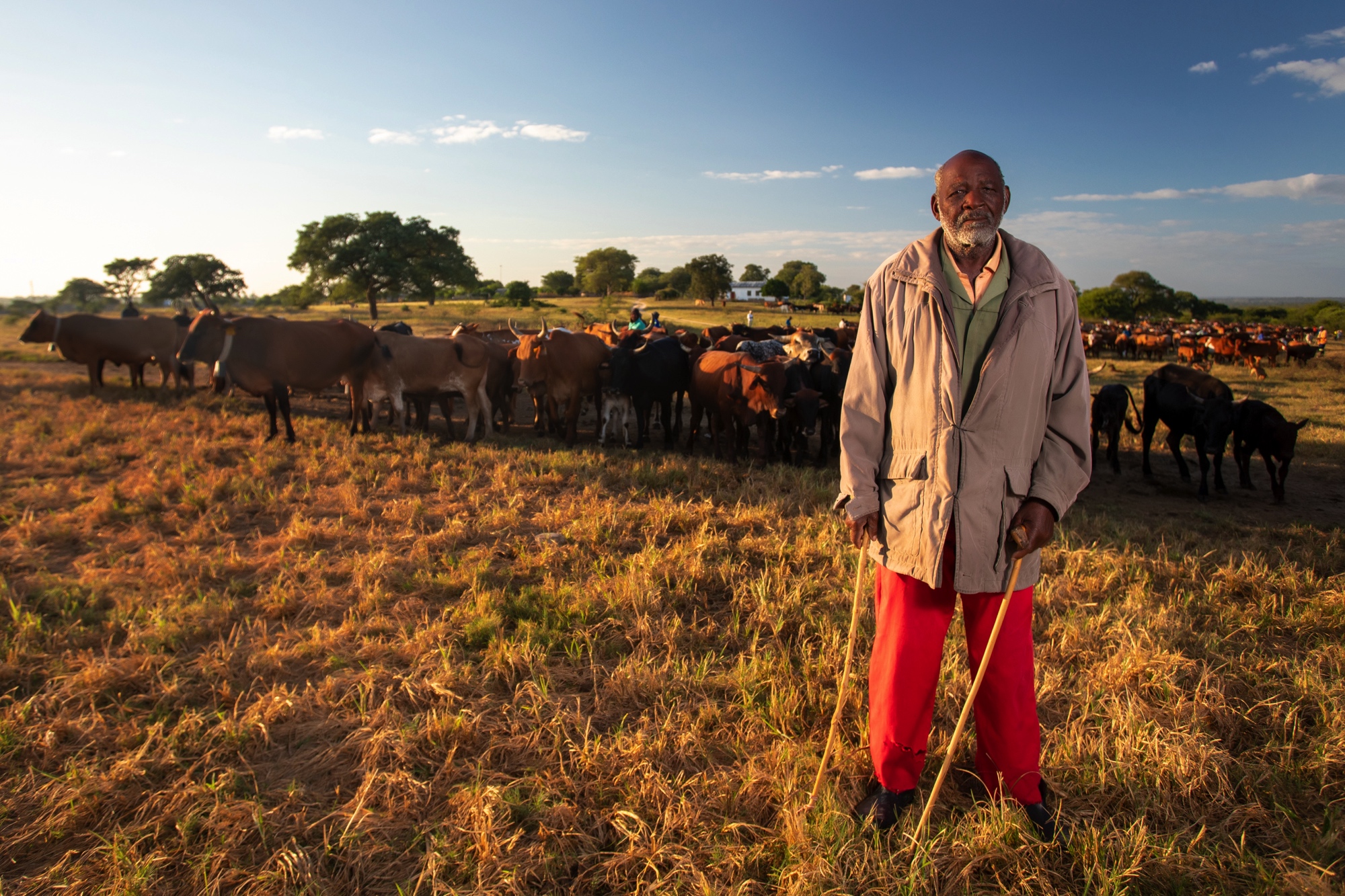
Global recognition affirms African community-led rangeland restoration as a practical solution for climate resilience, food security and nature.
Ulaanbaatar, Mongolia | 24 August 2026 – Herding for Health, a joint initiative of Conservation International and Peace Parks Foundation working in partnership with communities, governments, civil society organizations and funders to restore communal rangelands, is contributing to the United Nations Convention to Combat Desertification (UNCCD) Flagship Initiative at the seventeenth session of the Conference of the Parties (COP17) in Mongolia.
Herding for Health joins a group of initiatives contributing to the Flagship Initiative by demonstrating practical, measurable solutions to land degradation and biodiversity loss while supporting the livelihoods of rural communities living in and around protected areas.
Herding for Health is part of a group of trusted partners consulted by the UNCCD during the development of the Rangelands Flagship Initiative. The programme is already helping restore and improve the management of 1.5 million hectares of rangelands across seven African countries, with more than 6,000 livestock farmers participating and over 100,000 people benefiting. Herding for Health has also helped create more than 2,200 green jobs.
Across Southern Africa, vast savannas, grasslands and shrublands support more than 50 million Indigenous Peoples and local pastoralists, provide habitat for some of the world's most iconic wildlife, and store vast amounts of planet-warming carbon. Yet nearly half of Africa's native rangelands have been degraded by climate change, unsustainable land use, prolonged droughts and expanding settlements.
Anchored by four pillars, healthy rangelands, healthy animals, thriving livelihoods, and good governance and enabling policy, Herding for Health demonstrates how restoring rangelands can improve ecosystems, strengthen local economies and help communities adapt to a changing climate. "Herding for Health is a good example of the kind of ambitious and innovative financing approaches that are needed to ensure responsible investment in the rangelands and equitable outcomes for pastoralists," said Cathrine Mutambirwa, Programme Coordinator at Global Mechanism of the UNCCD.
Why this matters
The Rangelands Flagship Initiative, launched during the International Year of Rangelands and Pastoralists provides a platform for partners to demonstrate practical approaches that contribute to shared goals on rangeland restoration, resilience and sustainable livelihoods. For Herding for Health, participation in this process provides an opportunity to share experience from the field, contribute to the Initiative's common results framework and strengthen collaboration with governments and development partners.
By demonstrating its contribution to the common results framework of the Rangelands Flagship Initiative, Herding for Health can help showcase practical, scalable and potentially investable approaches with relevance beyond the landscapes where they are currently being implemented. Most importantly, it gives countries looking for practical solutions a tested model they can learn from and adapt to their own landscapes.
“Herding for Health is based on a simple but powerful idea: the people who rely on rangelands are their most effective stewards,” said Jimmiel Mandima, SVP and Chief Field Officer for Africa at Conservation International. “This contribution demonstrates that an approach developed alongside African pastoral communities can deliver value well beyond its original landscapes. As nations increasingly look for practical solutions to restore and manage rangelands, Herding for Health provides a tested and scalable pathway.”
Community-driven model
Herding for Health is founded on the principle that healthy landscapes and thriving communities depend on one another. The programme takes an integrated approach that links conservation, livestock production, and rural development, recognizing the close connection between healthy ecosystems, productive livestock systems, and resilient rural communities.
At the landscape level, pastoralist communities use planned and adaptive grazing to give grasslands time to recover naturally. They also remove invasive vegetation and adopt wildlife-friendly grazing practices that reduce overgrazing, improve soil structure and water retention, support biodiversity and make landscapes more resilient during drought.
For livestock farmers, better grazing translates into healthier animals and more reliable production. Through training and support for community-based animal health workers and professional herders, farmers gain access to improved veterinary services, practical livestock management skills and technical advice that helps reduce losses and improve productivity.
"The Herding for Health Programme has brought significant benefits to the people of Simalaha Community Conservancy, Zambia - improving livestock health, restoring degraded rangelands, creating employment and strengthening household incomes and productivity. Through planned grazing and professional herding, the programme is promoting peaceful coexistence among livestock, wildlife and communities while building resilience to climate change," Senior Chief Alexander Anan'anga Imwiko, Sesheke Municipality, Zambia.
Economic opportunity is also a critical part of the model. Herding for Health works with livestock farmers to improve their access to markets that reward sustainable livestock production, enabling communities to earn greater value from their livestock while protecting the natural resources that sustain them.
The programme supports community governance structures to strengthen collective decision-making over shared grazing lands. This builds ownership, reduces conflict over resources, and helps sustain restoration efforts long after projects end.
Traditional knowledge meets science
One of Herding for Health’s defining strengths is its ability to combine generations of pastoral knowledge with scientific research and innovation. For centuries, pastoral communities have managed livestock through seasonal movement and adaptive grazing practices. The programme builds on this knowledge through ecological monitoring, animal health expertise and landscape planning to develop grazing systems that benefit both people and nature. This approach supports healthier rangelands, more productive livestock systems and stronger resilience to climate shocks.
Herding for Health's engagement in the UNCCD Flagship Initiative provides an opportunity to demonstrate how these outcomes can contribute to a broader set of shared goals and inform approaches with potential for impact at scale.
While the Rangeland Initiative was announced on the global stage at COP17, it reflects work happening every day in pastoral communities that are managing and restoring their lands. Their deep knowledge, leadership and commitment to adaptive management are what has made Herding for Health successful.
"As community members, we have found Herding for Health to be very beneficial. The programme has helped us improve the health of our livestock while putting planned grazing and better rangeland management into practice. Through strategic grazing, livestock also contribute to restoring degraded rangelands by returning manure and nutrients to the soil. Herding for Health has also created employment opportunities for our young people as professional herders. Most importantly, healthier livestock fetch better prices, improved milk production, and give stronger draught power, improving the lives and livelihoods of our families. We are seeing the benefits not only in our animals, but also in our rangelands and in our communities." Mr Sikelenge Lunake, farmer partnering with Herding for Health Programme.
About Herding for Health
Herding for Health is a joint initiative of Conservation International and Peace Parks Foundation that works with governments, communities and strategic partners to restore rangelands through regenerative grazing, improved livestock health, strengthened local governance and sustainable market access. The programme operates across southern and eastern Africa, supporting healthy ecosystems, resilient livelihoods and climate-smart pastoralism.
Contact
Name: Kebabonye Morewagae
Title: Herding for Health Knowledge and Communications Manager
Email: kmorewagae@conservation.org
Telephone: +267 77730480
Website: www.herding4health.net
About Conservation International
Conservation International protects nature for the benefit of humanity. Through science, policy, fieldwork and finance, we spotlight and secure the most important places in nature for the climate, for biodiversity and for people. With offices in 30 countries and projects in more than 100 countries, Conservation International partners with governments, companies, civil society, Indigenous peoples and local communities to help people and nature thrive together. Go to Conservation.org for more, and follow our work on Conservation News, Facebook, Twitter, TikTok, Instagram and YouTube.
Contact
Name: Jessica Brown
Title: Managing Director, Global Media Relations
Emai: jbrown@conservation.org
About Peace Parks Foundation
Founded in 1997 by President Nelson Mandela, HRH Prince Bernhard of the Netherlands and Dr Anton Rupert, Peace Parks Foundation is a non-profit organisation pioneering conservation at scale across southern Africa.
Working through Transfrontier Conservation Areas that span national borders, Peace Parks connects protected areas, supports biodiversity conservation and ecological resilience, strengthens local economies and promotes regional peace and stability. Its holistic approach is built on three pillars: conservation at scale, community development and conservation finance, ensuring that protected areas deliver long-term ecological and economic value.
To date, Peace Parks has supported governments in establishing 780 000 km² of Transfrontier Conservation Areas across southern Africa. It also co-manages eight parks where wildlife populations have rebounded fivefold and supports more than 280 000 people annually through its interventions. With formal government mandates and strong community partnerships, Peace Parks offers a proven model for building resilience for people and nature across southern Africa’s most significant landscapes. The Foundation’s Vision 2050 is to secure 17 fully functional transboundary landscapes spanning 980 000 km², making it one of the world’s largest land-based conservation initiatives.
Website: www.peaceparks.org
Contact
Name: Fidelis Zvomuya
Title: Media Liaison and Public Relations Officer
Email: fzvomuya@peaceparks.org
Telephone: +27 65 857 4059
MEDIA KIT:
A unique strength of Herding for Health is its partnership nature.
View Partners

